
Cambodia and Vietnam
MEKONG RIVER CRUISE
Unforgettable expeditions along Asia’s most legendary river


A voyage into a fabled past
Culture and civilisations have flourished around great rivers throughout history and the Mekong is no exception.
While sailing on board the Aqua Mekong luxury cruise, discover rich heritage and traditions enriched by 2,000 years of human history. From the flourishing of the Khmer empire to the prominence of Theravada Buddhism in present-day Cambodia and Vietnam, this is one of the few cultural destinations on Earth that’s best explored through a river expedition. Embarking on expert-led excursions: kayak to floating villages, discover historic Buddhist temples, and cycle along picturesque ricefields to explore monuments from the Khmer Empire.
The luxurious Aqua Mekong river boat cruise charts a path through the picturesque lower Mekong basin with expert guides on board. Follow in the footsteps of royalty aboard our award-winning vessel where a 1:1 crew-to-guest ratio and luxuriously designed cabins will give you a home away from home. Aqua Mekong luxury cruise provides a truly immersive and personalized experience in this culture-rich landscape. With year-round itineraries departing from Ho Chi Minh City, Phnom Penh, and Siem Reap, this is the only luxury Mekong river cruise that provides complimentary flight extensions to Siem Reap during the low water season.
Into the heart of Indochina
11° 32.1322' N, 104° 54.791' E


Mekong trip highlights and excursions
Here’s a look at some of the top highlights which you’ll get to witness while sailing down the mighty Mekong delta.
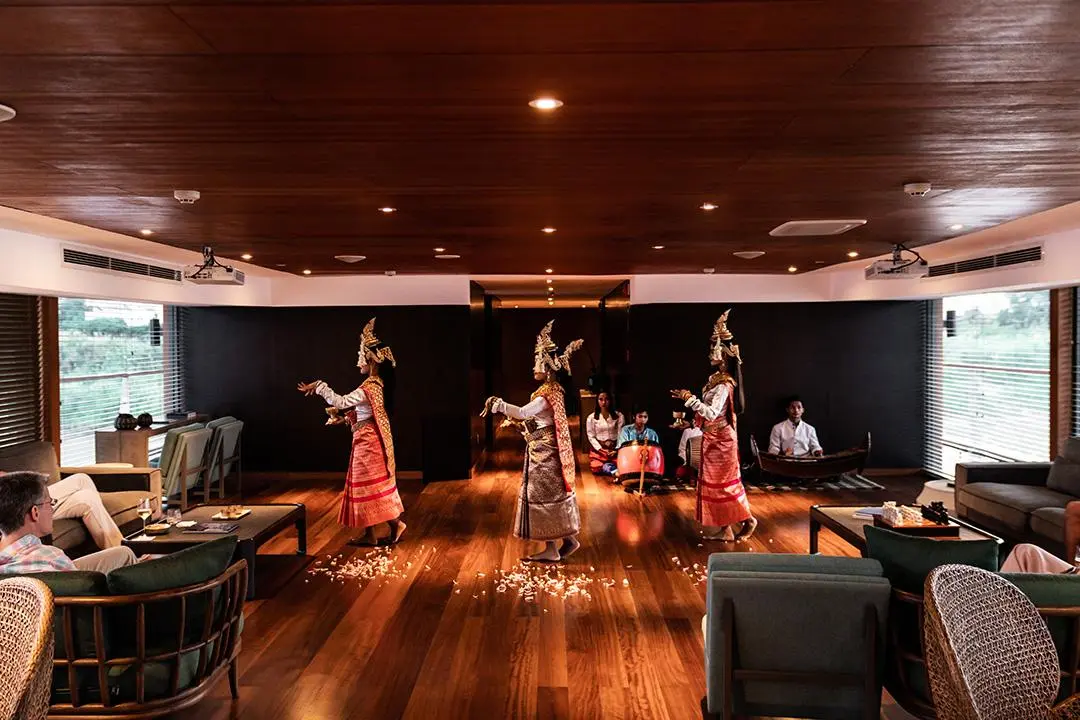 Khmer Aspara DanceAqua Mekong guests will witness the Khmer Apsara dance on our Mekong river boat cruise, a Cambodian tradition which used to be reserved for royalty.
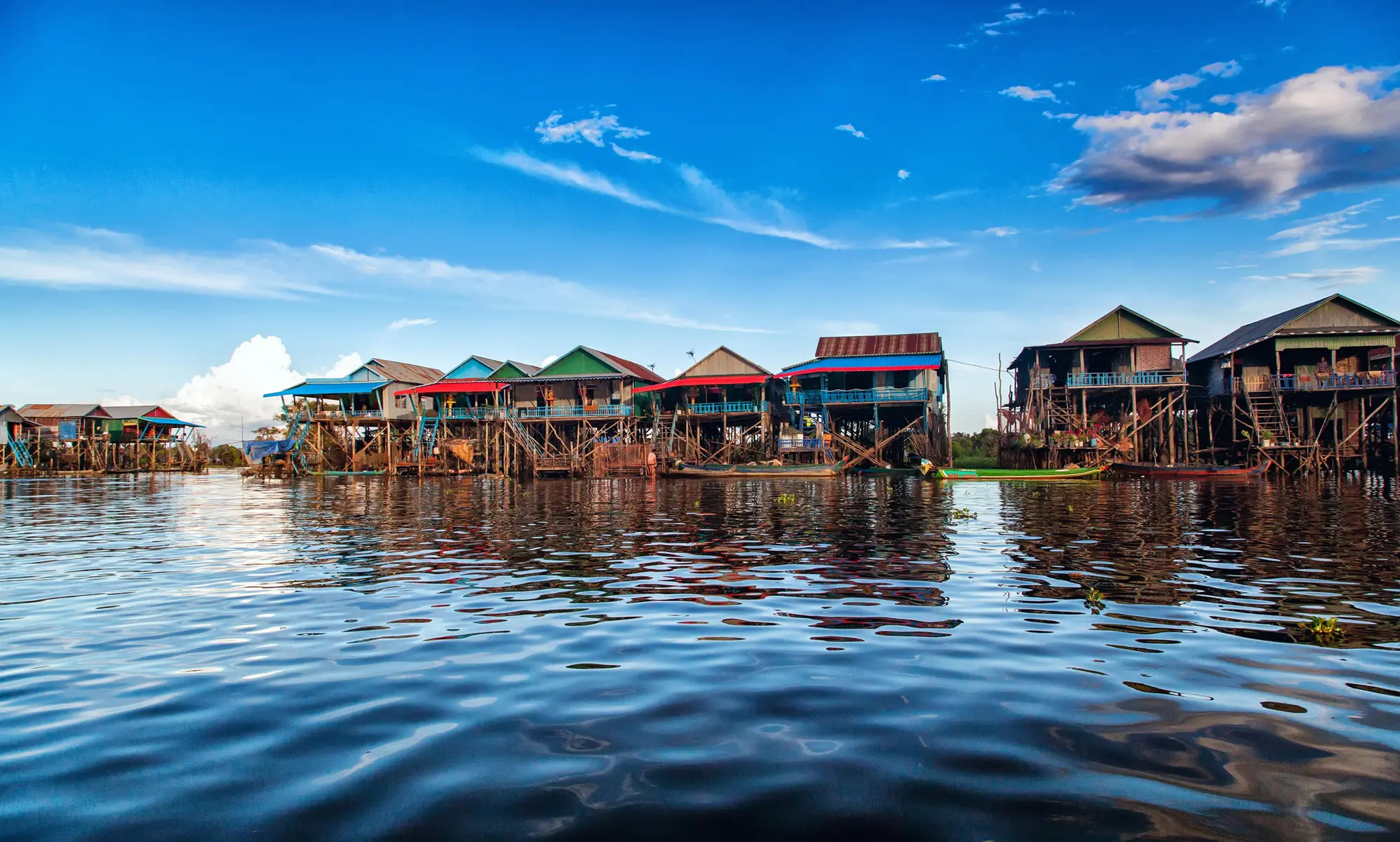 Floating VillagesIn Tonle Sap lake, discover the local way of life on a Mekong luxury cruise while exploring floating markets, sampling local produce, and interacting with the residents.
 Silk-weavingAt Koh Okhna Tay, also known as Silk Island, learn how artisans handcraft traditional krama silk scarves with our Mekong tour.
 Silversmith visitIn the village of Koh Chen, watch artisans produce royal Khmer silverware, still gifted by Cambodia’s king to visiting dignitaries.
 Ceremonial blessingThe best Mekong river cruise is incomplete without experiencing a ceremonial blessing from a monk in the floating village of Moat Khla.
 Tuk-tuk rideExplore the cities on our Mekong delta tour through tuk-tuk rides – a local form of three-wheeled transport, which offer one of the most convenient ways of getting around.
 Mat-weavingIn the village of Binh Thanh, learn about the intricate art of mat-weaving which has been passed down over the centuries.
 Temple visitsVisit the Mekong’s most culturally significant temples and learn more about their history from our expert guides on our Mekong tour.
11° 32.1322' N, 104° 54.791' E


Explore Aqua Mekong

What our guests say


FAQs
Frequently Asked Questions
Have a question? Don’t be shy. We’re here help you make the most of your adventure. Find answers to our most frequently asked questions below. If you still need help contact us.
Where is the Mekong river located? Which countries does our Mekong river cruise sail by?
The Mekong River, one of the longest rivers in Southeast Asia, flows through six countries: China, Myanmar, Laos, Thailand, Cambodia, and Vietnam. Spanning around 2,700 miles (4,350 kilometers), it begins high in the Tibetan Plateau and winds its way south, emptying into the South China Sea via a vast delta in southern Vietnam. We believe the Mekong is best sailed in Cambodia and Vietnam, with both countries showcasing the delta's natural beauty and its finest cultural experiences.
Along the Cambodian leg of our itineraries, guests explore fascinating floating villages and the Tonle Sap Lake, a UNESCO Biosphere Reserve courtesy of its unique ecosystems. This region presents an insight into the ancient Khmer Empire, which has left behind a lasting influence. Over in Vietnam, guests are treated to an unparalleled immersion into daily life along the Mekong. There are opportunities to bike along the countryside and explore towns rife with French colonial influence.
What does my all-inclusive Aqua Mekong cruise price include?
Aqua Expeditions Mekong River Cruise rates include all meals, non-alcoholic drinks, selected wines and beer, design suite accommodations, complimentary high-speed Wi-Fi, excursions with knowledgeable local guides, onboard lectures, and evening entertainment. Before and after your cruise, we provide transportation between the vessel and our rendezvous point (For Ho Chi Minh City and Siem Reap embarkation/disembarkation only: We provide complimentary shared transfers between the meeting point and the vessel). Complimentary snacks and afternoon tea are provided at the meeting points (Park Hyatt Siem Reap and The Reverie Saigon) prior to embarkation. Breakfast will be provided on your last day and is included in the rate. One advantage of our “all inclusive” rates is that you know in advance exactly how much your Mekong River vacation will cost. Your only additional expenses will be airfare, cocktails, boutique purchases, spa and gratuities.
What should I pack on my Mekong River Cruise?
Life is casual on board the Aqua Mekong. During meals in the dining room, we invite our guests to dress
casually and ask you to please wear shoes.
We recommend you to bring the following items:
• Comfortable walking shoes
• Quick drying and lightweight clothing
• Lightweight long pants
• Lightweight rain gear
• Long-sleeved tops
• Wide-brimmed hat
• Sunscreen
• Mosquito repellent
• Your camera! With charger, extra batteries and memory cards
• Bathing suit
Aqua Expeditions provides the following on board:
• Waterproof ponchos with hoods to protect against rain
• A hairdryer in every suite
• Our vessels have 220-volt outlets in the staterooms
• Binoculars 8x12
Do you have cell, satellite connection or Internet connectivity on board?
Aqua Mekong is equipped with internal telephones for communication between suites and for onboard services. In case of emergency onboard during the night, please contact the Cruise Director. If you need to contact your home or office in an emergency, Aqua Mekong is equipped with a satellite phone. The cost of your call may be paid directly on board. We will inform you, prior to calling, of the current price of an international call. Aqua Mekong offers complimentary access to high-speed Wi-Fi for all guests.
What does the itinerary with Siem Reap (extension) mean?
Aqua Expeditions offer complimentary flight extensions to Siem Reap when cruise vessels are seasonally unable to travel up the Tonle Sap Lake due to low water levels. We are proud to be the only Mekong cruise line to offer flights, which are included in the unchanged cruise fare. The flight extensions take effect as of 31st December 2023 and include a fully escorted private luxury car transfer to Phnom Penh airport upon disembarkation. Airplane transfers are booked on Cambodia Airways or Cambodia Angkor Air so guests may visit the ancient lost city of Angkor Wat in comfort and style.
Do I need a visa for Cambodia and Vietnam? Is there any required vaccination before traveling?
Please refer to our guidelines for obtaining visas to travel to Cambodia and Vietnam. The linked document includes necessary details which must be included in your visa applications, depending on your chosen itinerary.
For information on required vaccinations, please refer to the official website of the Cambodian Ministry of Foreign Affairs and the Vietnamese Ministry of Foreign Affairs.
Should I buy travel insurance for my trip to Vietnam and Cambodia?
Guests are strongly advised to purchase trip cancelation insurance, which will reimburse the cost of air tickets and other non-refundable trip payments. International medical, baggage loss, and delay insurance are also recommended. Insurance companies such as Travel Guard and Allianz are options that guests may consider.
If the Aqua Mekong is not able to sail (i.e. due to force majeure or mechanical failure), Aqua Expeditions reserves the right to substitute another vessel. If the travelers do not take this option, Aqua Expeditions reserves the right to cancel the trip upon a refund pro rata per cruise night not used or, as an alternative, will offer credit toward a future Aqua Mekong cruise.
How old do you have to be to cruise on the Aqua Mekong?
The minimum recommended age to travel on the Aqua Mekong is five. Passengers must be at least 18 years of age to travel without their parents or guardians. If any occupant in the cabin is under 18, then a passenger at least 25 years old must be booked in the cabin with them. The only exception is that children under age 18 may be allowed to have their own cabin if they are in a connected suite shared by their parents or guardians.
Is there any difference between the lower and upper-deck suites?
Dimensions and all features are exactly the same for both decks. Differences in suites exist only between those with balconies and those without balconies.
What if I have special dietary needs?
If you have special dietary requests, we strongly recommend that you inform Aqua Expeditions at the time of booking, or at least by 30 days prior to embarkation. Every effort will be made to cater to special dietary needs, and to accommodate special requests, subject to a given product’s availability in Vietnam and Cambodia.
Sign up to our newsletter
